
- admin
- GP Letters Belconnen
- September 22, 2026
- No Comments
Medical Documentation Services in Belconnen: GP Letters, Certificates and Medical Reports
Medical documents are often needed at short notice. A workplace may ask for a medical certificate after an illness. A school or university may need supporting documentation. An insurer, government agency, employer, lawyer or another healthcare professional may request a medical report or letter.
For patients, understanding which document is appropriate can sometimes be confusing.
Medical Documentation Services in Belconnen can help patients obtain appropriate GP documentation based on their clinical consultation and individual circumstances. At Verity Medical Practice in Belconnen, medical documentation may be required for a range of everyday, employment, education, insurance and healthcare-related purposes.
A GP cannot simply provide every type of certificate or report on request. The document needs to reflect the doctor’s assessment, available clinical information and the requirements of the organisation requesting it.
This guide explains the common types of medical documentation, when they may be needed, what to prepare before an appointment and how to make the process easier for patients in Belconnen and across Canberra.
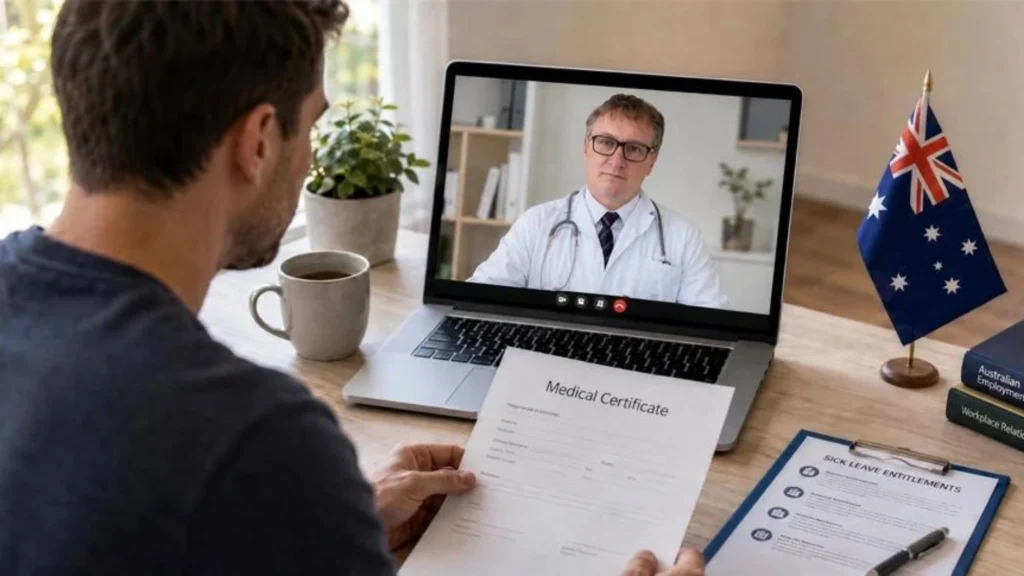
Medical Documentation Explained
Medical documentation is written information prepared by a registered medical practitioner about a patient’s health, consultation, diagnosis, treatment, functional capacity or other clinically relevant information.
The type of document depends on why it is required.
Common examples include:
- Medical certificates
- GP letters
- Medical reports
- Fitness-for-work documentation
- Supporting letters for education
- Forms requested by government agencies
- Documentation for insurance purposes
- Referrals and healthcare correspondence
- Reports relating to ongoing medical conditions
- Documentation supporting workplace or activity requirements
Each document serves a different purpose. A short medical certificate is not the same as a detailed medical report.
The information included should also be appropriate for the intended recipient. Doctors are expected to provide accurate information and avoid making statements beyond their knowledge or professional assessment.
Why Patients May Need Medical Documentation
Medical documentation can help communicate important health information to an organisation or professional that needs evidence.
For example, a patient may need documentation to explain:
- A period of illness
- Temporary inability to work
- An injury
- A medical condition affecting study
- A need for workplace adjustments
- A health-related absence from school
- A requirement for further medical assessment
- Relevant health information for an insurer
- A need for another healthcare professional to understand the patient’s history
Having appropriate documentation can reduce confusion between the patient, healthcare provider and organisation requesting the information.
However, requirements vary. Before booking an appointment, it is useful to check exactly what the employer, school, insurer, government agency or other organisation is asking for.
GP Medical Certificates in Belconnen
A medical certificate is generally a relatively concise document confirming information about a patient’s medical condition and its effect on their ability to work, study or undertake certain activities.
For example, a patient recovering from an illness may require documentation confirming that they were medically unfit for work for a specified period.
A medical certificate should be based on the doctor’s clinical assessment. Doctors should only sign documents that they believe are accurate and should take reasonable steps to verify the information included.
The exact requirements can depend on the organisation receiving the certificate.
For example, Services Australia specifies particular information for some medical certificates used for income-support or mutual-obligation purposes. These requirements can include the condition, expected duration and period of incapacity.
This is why patients should tell the GP exactly where the document will be submitted.
Common Reasons for a Medical Certificate
A GP medical certificate may be requested for situations such as:
- Short-term illness
- Recovery from an injury
- Temporary inability to work
- Study-related absence
- Workplace requirements
- Certain government support requirements
- Other situations where medical evidence is requested
Not every request will result in a certificate. The GP needs to determine whether the documentation is clinically appropriate.
GP Letters for Work, School and Other Purposes
A GP letter can provide more context than a basic medical certificate when this is clinically appropriate.
For example, a patient may require a letter explaining a health-related circumstance affecting their participation at work or study.
Depending on the situation, a letter may discuss relevant clinical information, treatment considerations, restrictions or recommendations that fall within the doctor’s knowledge.
The amount of information provided should be appropriate to the purpose of the letter.
Patients should not assume that a GP can include any statement they request. A doctor must ensure that the information provided is accurate and professionally justified.
This protects both the patient and the healthcare professional.

Medical Reports and Detailed Documentation
A medical report is usually more detailed than a standard certificate or brief GP letter.
It may be requested by an insurer, legal representative, employer, government organisation or another authorised party.
Depending on the purpose, a report may require information such as:
- Relevant medical history
- Clinical findings
- Investigations
- Diagnosis or relevant medical conditions
- Treatment history
- Current management
- Functional impact
- Relevant prognosis
- Other clinically appropriate information
The exact content depends on the request.
For legal or independent medical assessments, the doctor’s role and responsibilities can be different from those of a treating GP. The Australian Medical Association notes that treating doctors generally provide factual information about a patient’s condition and should clearly identify their role when preparing reports.
This distinction is important when a report is being prepared for legal or administrative purposes.
Medical Documentation in Canberra for Employment
Employment-related documentation is one of the common reasons patients may seek medical paperwork.
An employer may request evidence following illness, injury or another health-related circumstance.
Depending on the situation, documentation may relate to:
- Sick leave
- Return to work
- Temporary restrictions
- Workplace adjustments
- Physical limitations
- Recovery following an injury
- Fitness-related requirements
- Ongoing health considerations
The required document may differ between employers.
Some workplaces only require a simple certificate, while others may provide a specific form that needs to be completed by a doctor.
If your employer has supplied a form, bring it to the appointment. This allows the GP to understand what information is being requested.
Documentation for Schools and Universities
Students may sometimes require medical documentation for health-related absences or special circumstances.
A GP letter or certificate may be requested when an illness, injury or other medical issue has affected attendance, examinations, assignments or participation.
Before requesting documentation, students should check their institution’s requirements.
Some institutions may specify:
- The type of document required
- The dates that need to be covered
- Whether a diagnosis is required
- Whether a particular form must be completed
- Whether supporting evidence is necessary
Providing these requirements to the GP can make the consultation more efficient.
Government Forms and Medical Evidence
Some government services require medical evidence as part of an application, assessment or support process.
The required documentation varies depending on the program.
For example, Services Australia has specific medical forms that can only be completed and signed by eligible healthcare professionals. Its Verification of Medical Conditions form is different from a standard medical certificate and has a specific purpose.
Patients should therefore avoid assuming that a general medical certificate will automatically meet the requirements of a government agency.
If you have received a specific form, bring the complete form and any instructions with you.
Insurance-Related Medical Reports
Insurance companies may request medical information when assessing a claim.
Depending on the claim, the insurer may request a letter, report, questionnaire or specific form.
Examples can include documentation relating to:
- An injury
- An illness
- Previous treatment
- Functional limitations
- Medical history
- Recovery
- Ongoing treatment
The GP can provide information within their clinical knowledge and based on relevant medical records.
A detailed insurance report may require more time than a routine certificate, particularly if the doctor needs to review previous consultations, test results or other records.
Medical Documentation for Legal Purposes
Legal matters may sometimes involve medical records, reports or letters.
These situations can be more complex because the documentation may be reviewed by lawyers, insurers, courts, tribunals or other decision-makers.
A treating GP’s role is not necessarily the same as that of an independent medical assessor or expert witness.
For example, AMA guidance explains that treating doctors generally provide factual information concerning a patient’s condition and should avoid offering opinions outside their role or expertise.
If you require documentation for a legal matter, provide the GP with the exact request and any relevant forms or correspondence.
This helps the doctor understand what information is being requested and for what purpose.
Information Your GP May Need
Preparing before your appointment can make medical documentation easier.
Bring or provide:
- The form requiring completion, if applicable
- The name of the organisation requesting the document
- The purpose of the documentation
- Relevant dates
- Details of the condition or injury being discussed
- Previous documentation if relevant
- Relevant specialist letters or test results
- Any specific questions that need to be addressed
If another organisation has given you written instructions, bring those instructions to the consultation.
This can help avoid delays caused by missing information.
Why a Consultation May Be Required
Patients sometimes expect a certificate or letter to be issued without an appointment.
However, medical documentation should be based on appropriate clinical information.
A consultation allows the GP to:
- Understand the reason for the request.
- Discuss the relevant health issue.
- Review available medical information.
- Assess the patient’s current circumstances.
- Determine what documentation is clinically appropriate.
- Complete the document accurately where possible.
The Australian Medical Association has noted the importance of clinical assessment and accurate documentation when medical certificates or reports are prepared.
The consultation may be face-to-face or, where clinically appropriate, another suitable consultation format. The appropriate option depends on the patient’s circumstances and the type of documentation required.
Medical Documentation and Patient Privacy
Medical documents can contain sensitive health information.
Patients should understand who will receive the document and why.
Only information relevant to the purpose of the documentation should generally be provided. The level of detail required can vary depending on the form, organisation and circumstances.
For example, a workplace may only need confirmation of a period of illness or work capacity rather than extensive clinical details.
If you are unsure about how much information is required, discuss this with your GP before the document is finalised.
Privacy is particularly important when documents are being sent to employers, insurers, educational institutions or other third parties.
When a GP May Not Provide a Requested Document
A medical practitioner cannot necessarily provide every document requested by a patient.
A GP may need to decline or modify a request if:
- There is insufficient clinical information.
- The requested statement cannot be supported medically.
- The request falls outside the doctor’s knowledge or expertise.
- The requested information would be inaccurate.
- The documentation requires an assessment the GP cannot appropriately provide.
- The organisation has specific requirements that cannot be met.
- More information or assessment is needed.
This does not necessarily mean that the patient’s health concern is not being taken seriously.
Doctors have professional responsibilities when preparing medical certificates and reports. Documentation should be truthful, accurate and based on appropriate evidence.
Preparing for Medical Documentation Services in Belconnen
If you need a certificate, letter or report, a little preparation can make the appointment smoother.
Check the Requirements
Read the request carefully.
Find out whether you need:
- A certificate
- A letter
- A medical report
- A specific form
- A specialist report
- Supporting medical evidence
Bring the Correct Form
If an employer, university, insurer or government agency has provided a form, bring it to the appointment.
Do not assume that a standard GP letter will be accepted instead.
Know the Relevant Dates
Be prepared to provide important dates relating to:
- Your illness or injury
- Absence from work or study
- Treatment
- Previous consultations
- The period covered by the requested document
Explain the Purpose Clearly
Tell the GP who will receive the document and why it is required.
This helps the doctor determine what information may be relevant.
Allow Time for Detailed Reports
A short certificate may be straightforward, while a detailed medical report can require review of records and additional information.
If you have a deadline, mention it during your appointment.
Medical Documentation in Canberra: Choosing the Right Type of Document
Patients in Canberra may encounter different documentation requirements depending on their workplace, educational institution, insurer or government service.
The key is not simply obtaining “a medical document”. The document needs to match the purpose.
For example:
Short absence: A medical certificate may be appropriate when an organisation simply needs evidence of illness.
Workplace adjustment: A more detailed letter may be useful when the employer needs information about relevant restrictions or adjustments.
Government requirement: A specific government form may need to be completed rather than a general letter.
Insurance claim: An insurer may request a structured report or questionnaire.
Legal matter: The request may involve more detailed medical evidence and specific reporting requirements.
Understanding this difference can prevent unnecessary appointments and delays.
Local Medical Documentation Support in Belconnen
For people living or working in Belconnen, having access to a local GP can make it easier to discuss documentation requirements alongside general healthcare needs.
Verity Medical Practice provides general practice services in Belconnen, Canberra, where patients can discuss their health concerns and documentation requirements with a GP.
Whether you need a routine medical certificate, a supporting letter or documentation connected with a more detailed medical matter, the first step is to explain the purpose and provide any relevant forms or instructions.
The GP can then determine what assessment and documentation are appropriate.
Making Your GP Documentation Appointment Easier
A documentation appointment does not need to be complicated.
Before attending, consider these practical steps:
- Read the organisation’s requirements.
- Download or print the required form.
- Bring identification and relevant medical information where appropriate.
- Note important dates.
- Explain the purpose of the document.
- Tell the GP about any deadline.
- Bring previous reports if they are relevant.
- Ask whether additional information is needed.
Good preparation helps the consultation stay focused and reduces the possibility of missing important requirements.
Why Accurate Medical Documentation Matters
A medical document may be used by someone who was not present during the patient’s consultation.
The document therefore needs to communicate relevant information clearly.
Accurate documentation can help:
- Employers understand relevant medical restrictions.
- Educational institutions understand health-related circumstances.
- Government agencies assess medical evidence.
- Insurers review claims.
- Other healthcare professionals understand relevant clinical information.
- Patients provide evidence when it is legitimately required.
Doctors must balance usefulness with accuracy and privacy.
Medical documentation is not simply administrative paperwork. In some circumstances, it can become an important part of employment, education, insurance, healthcare or legal processes.
Book an Appointment for Medical Documentation in Belconnen
If you need a GP certificate, medical letter, form or report, start by checking exactly what the requesting organisation requires.
At Verity Medical Practice in Belconnen, patients can discuss their documentation needs with a GP as part of an appropriate medical consultation.
Bring any forms, instructions, previous reports and relevant dates to your appointment. This can help the GP understand the request and determine the appropriate documentation.
For Medical Documentation Services in Belconnen, contact Verity Medical Practice to arrange an appointment and discuss your requirements.
FAQs
Q1. Can a GP provide a medical certificate for work?
A GP may provide a medical certificate when it is clinically appropriate and supported by the consultation. The certificate should accurately reflect the doctor’s assessment and the relevant period of illness or incapacity. Employers may have different documentation requirements, so patients should check their workplace policy and bring any specific form or instructions to the appointment.
Q2.Can I request a GP letter for university or school?
Yes, a GP may provide appropriate documentation for education-related circumstances when supported by the clinical assessment. Requirements vary between schools, universities and educational providers. Before your appointment, check whether the institution requires a certificate, letter or specific form. Bringing those requirements to the consultation helps the GP understand what information needs to be considered.
Q3. Does a medical report contain more information than a certificate?
Usually, a medical report is more detailed than a standard medical certificate. Depending on its purpose, it may discuss relevant medical history, clinical findings, treatment, functional limitations and other appropriate information. The exact content depends on the organisation requesting the report and what the doctor can clinically support based on available information.
Q4. Can a GP complete government medical forms?
Some government forms can be completed by eligible medical practitioners, but requirements differ between programs. A government agency may require a specific form rather than a general medical certificate. Patients should bring the original form and instructions to their appointment. For example, Services Australia has specific medical forms with defined information requirements.
Q5. How should I prepare for a medical documentation appointment?
Check exactly what document you need and who will receive it. Bring any forms, written instructions, relevant reports and important dates. Explain the purpose of the documentation and mention any deadline. If the request relates to work, study, insurance or a government service, providing the organisation’s requirements can help the GP determine what information is clinically appropriate.
Elemmentor Box
Dr Peyman Mirarabshahi
General Practitioner
Dr Peyman Mirarabshahi is a highly experienced General Practitioner committed to delivering comprehensive, patient-centred care.
Recent Posts
Medical Certificates from a GP in Belconnen for Work and Study
Medical Documentation Services in Belconnen: GP Letters, Certificates and Medical Reports
Health Check for Adults: What Should a Routine Check-Up Include?
Categories
Tag Cloud